Generational Divide Threatens Synodal Vision of Inclusive “Circular Church”
By Ms. Teresia Muia
At a recent workshop in HIPSIR, thirty-three theology students from Tangaza University explored the Final Synod Document, sparking vital discussions on neglected Church missions, formation inspired by synodality, reconnecting disaffiliated youth, and a sharp generational divide in formation. This tension between tradition-focused elders and freedom-seeking youth sparked intense debate.
Held on August 16th, 2025, and guided by Sr. Elisabeth Nziwa from Catholic University of Eastern Africa, Dr. Elias Mokua SJ, and Ms. Teresia Muia from Loyola Centre for Media and communications, the students reflected on the synod’s call for a Circular Church; one rooted in inclusivity, shared decision-making, and mutual respect across generations. Yet the generational rift identified threatens the unity the synod seeks to build.
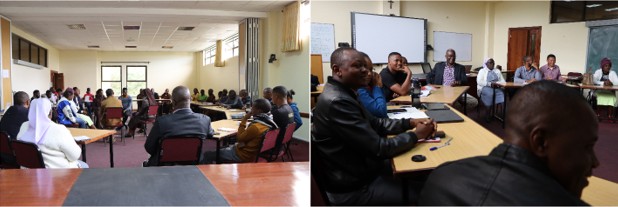
Dr. Elias Mokua, SJ, and Sister Elizabeth Nziwa attentively listen as leaders share their concerns about the generational divide in formation houses and beyond.
The participants pointed out several critical issues fueling the divide within religious formation houses and beyond. The older generation tends to prioritize rigidity, deeply valuing tradition, strict hierarchies, and clerical titles. Conversely, the younger generation pushes for flexibility, open dialogue, and more equal relationships that question traditional authority structures.
This clash leads to profound differences in communication styles and approaches to freedom and authority. Younger members express a strong desire for greater freedom and openness in discussions, while older leaders often hold firm to authoritative methods, creating frequent misunderstandings and conflict. These tensions also intersect with an identity crisis among younger Church members who struggle to define their role in the Church and society at large.
Such generational discord presents a tangible threat to the synodal vision. The attachment to hierarchy and tradition by older members may alienate the youth, risking fragmentation when unity and mutual respect are most needed. Without addressing these divides, the Church could find itself unable to fully embody the Circular Church ideal—one where every voice matters and collaborative mission drives the community forward.
The workshop underscored the urgent need for dialogue that bridges the generational gap, fostering respect for both tradition and innovation. Only by embracing this challenge can the Church move closer to its goal of creating a truly participatory, mission-focused community that honors all its members’ contributions.