“I know the Church in this part of the world has never been corrupt.”
The remark by Dr. Elias Mokua, SJ sparked laughter and then a moment of reflection. Beneath the humor lay a serious question: how accountable are religious institutions when no one is looking?
It was during a workshop at the Hekima Institute of Peace Studies and International Relations that religious leaders and formators gathered to confront sensitive but necessary themes; accountability, transparency, safeguarding, and the ethical use of power within formation houses.
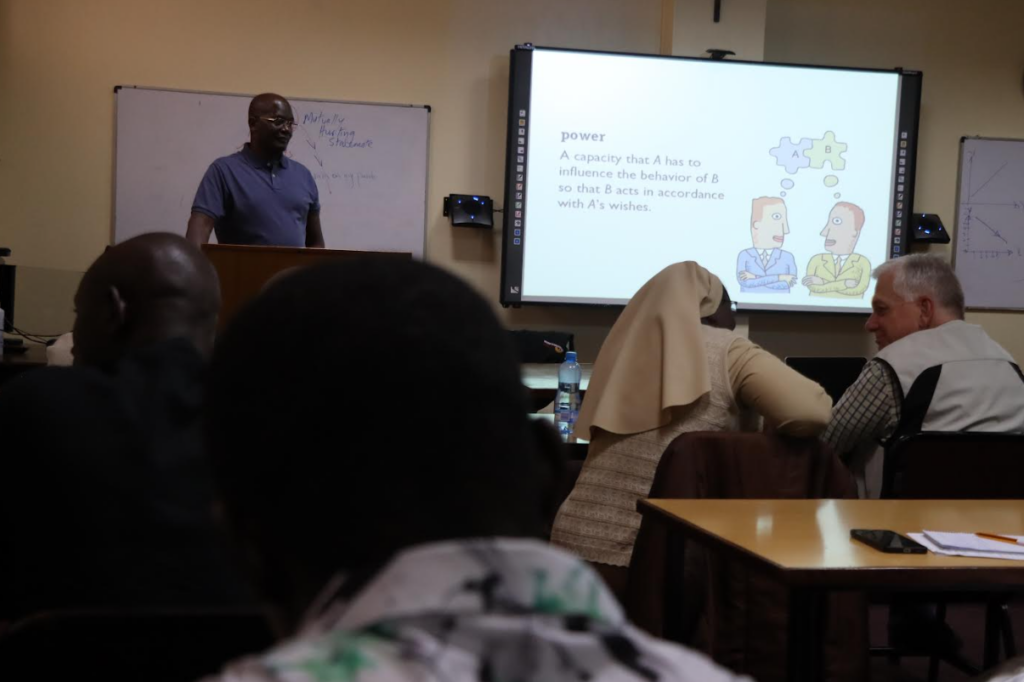
Dr. Elias Mokua, SJ, during the synodality workshop addressing corruption and accountability at the Hekima Institute of Peace Studies and International Relations in Nairobi.
Dr. Mokua challenged participants to look beyond financial corruption and consider subtler forms: favoritism, secrecy, unchecked authority, and decisions made without consultation. “Where monopoly of power exists without accountability,” he noted, “corruption finds space.”
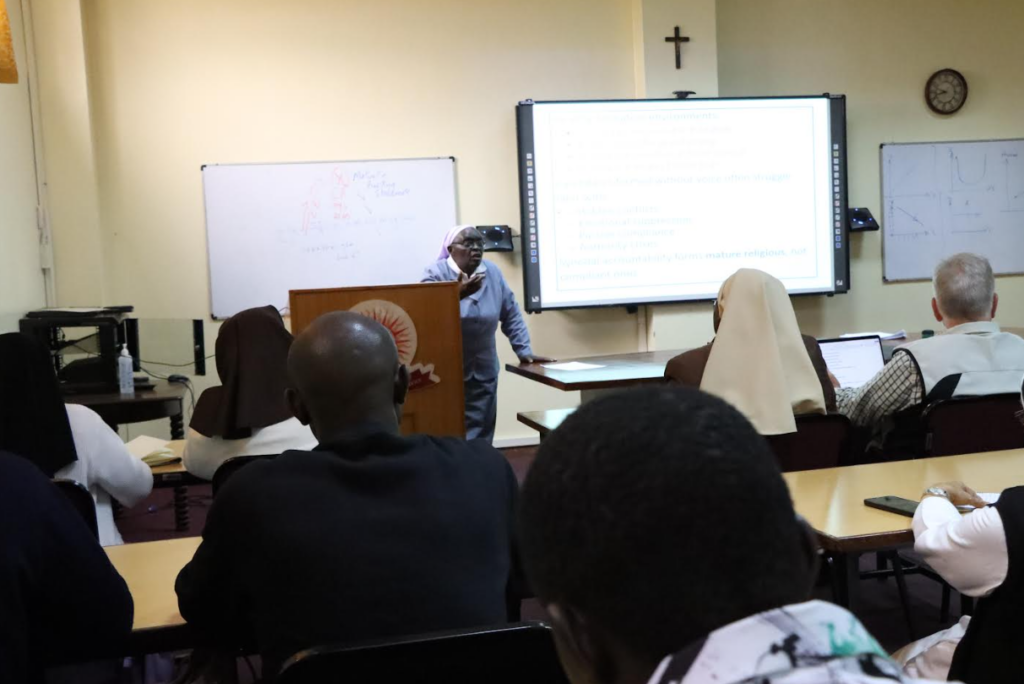
In her presentation, Sr. Elizabeth Nziwa questioned the culture of silence in some formation settings. “Is silence always respect, she asked, or can it be fear?” Candidates formed without a voice may become compliant but not mature. Synodal leadership, she emphasized, forms religious who can dialogue, discern, and take responsible ownership of their vocation.
Sr. Elizabeth Nziwa addressing participants during a workshop on transparency and accountability in formation houses in Nairobi.
Safeguarding also featured prominently. Participants were reminded that vulnerability is not limited to children but can include novices, domestic workers, and elderly members within religious communities. Clear policies, safe reporting structures, and regular evaluations were highlighted as essential for building trust.
A key insight from the workshop was that many vocational departures today are not crises of faith, but crises of trust. Young people remain where environments are honest, fair, and psychologically safe.
As discussions concluded, one message stood out: synodality is not theory. It is a commitment to listening, consultation, and shared responsibility. And for religious communities seeking credibility in today’s world, accountability and transparency are no longer optional; they are foundational.