
When the Rains Come, Dignity Should Not Be Left Behind: Rethinking Shelter for Samburu's Pastoralist Communities
By Ms. Susan Nzomo
A roof is more than protection from the rain. It is a question of dignity, security and the right to live with a measure of certainty in an increasingly unpredictable climate.
Between 15 and 18 November 2026, Hakimani Eastern Africa returned to three communities in Samburu County – Lerata, Kirish and Kamboe – with a commitment that began months earlier: to help families secure dignified shelter for themselves, their children and their livestock.
What began as a needs assessment in July has gradually grown into a community-driven fundraising and friend raising campaign aimed at addressing one of the less-discussed dimensions of vulnerability among pastoralist communities: inadequate shelter.
For families living in these communities, the challenge of shelter is not simply about having a roof overhead. It is about enduring increasingly unpredictable weather conditions, protecting household belongings, safeguarding children and keeping livestock, which remain central to pastoralist livelihoods, from exposure to harsh environmental conditions.
When the rains arrive, these vulnerabilities become even more pronounced.
Climate vulnerability is also a question of shelter and dignity
Conversations about climate change in pastoralist regions often focus on prolonged droughts, water scarcity, livestock losses and food insecurity. While these are critical concerns, another dimension deserves equal attention: the quality and adequacy of the shelter available to families navigating these changing conditions.
For a household living under a compromised roof, heavy rainfall is not merely a weather event. It can mean water entering sleeping spaces, damaged belongings, disrupted family life and increased exposure for children and livestock.
As communities face growing concerns about El Niño-related weather patterns and changing rainfall conditions, the question of dignified shelter becomes even more urgent.
Climate resilience cannot be measured exclusively by the number of trees planted, water points constructed or livestock supported. It must also be measured by whether families have safer and more dignified places to live when environmental conditions become difficult.
This is why the Manyatta intervention matters.
A manyatta is more than a physical structure. It is a home, a centre of family life, a place of belonging and an important part of Samburu cultural identity. Supporting families to improve their roofing is therefore not simply a material intervention; it is an investment in dignity, protection and household resilience.
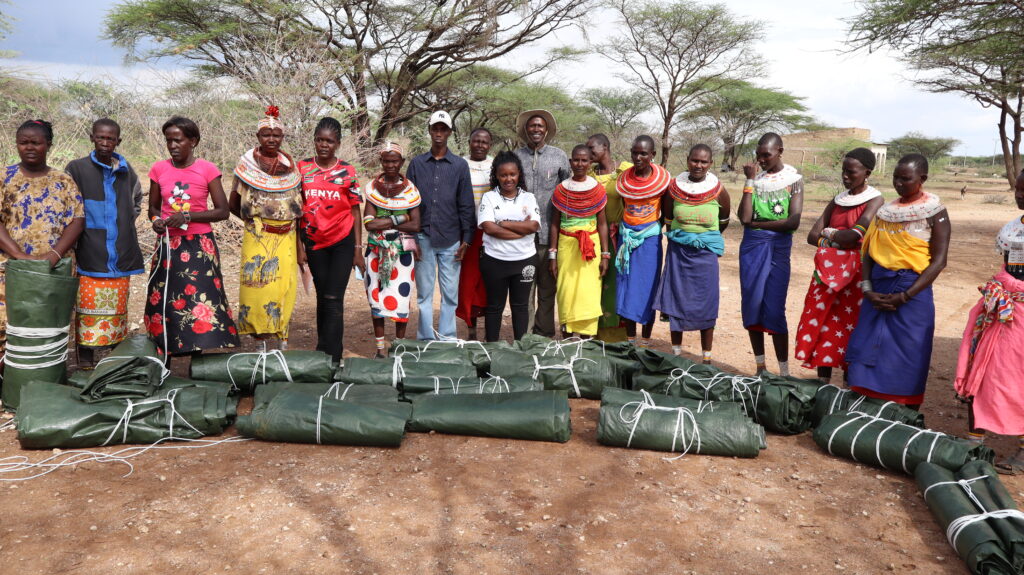
From listening to action: A commitment that began in July
The November intervention did not begin with the distribution of roofing materials. It began with listening.
During a visit to Lerata, Kirish and Kamboe in July 2026, Hakimani Eastern Africa undertook a needs assessment to better understand the living conditions and shelter challenges facing households in the three communities.
The assessment informed an ambitious target: to support 370 families with more dignified roofing solutions.
Rather than treating the need as another humanitarian statistic, Hakimani embarked on a fundraising and friend raising campaign, reaching out to friends, partners, well-wishers and organisations willing to stand with the communities.
That commitment received a significant boost through HUBEJE Belgium, a member of the Xavier Network, whose support enabled the first phase of the intervention.
During the November visit, roofing materials, including tarpaulins, were supplied to approximately 70 households across the three communities.
While this represents an important milestone, it also reveals the scale of the work that remains. With approximately 300 households still awaiting support, the intervention is far from complete.
The 70 households reached are not the conclusion of the campaign. They are evidence of what becomes possible when solidarity moves beyond sympathy and translates into practical action.
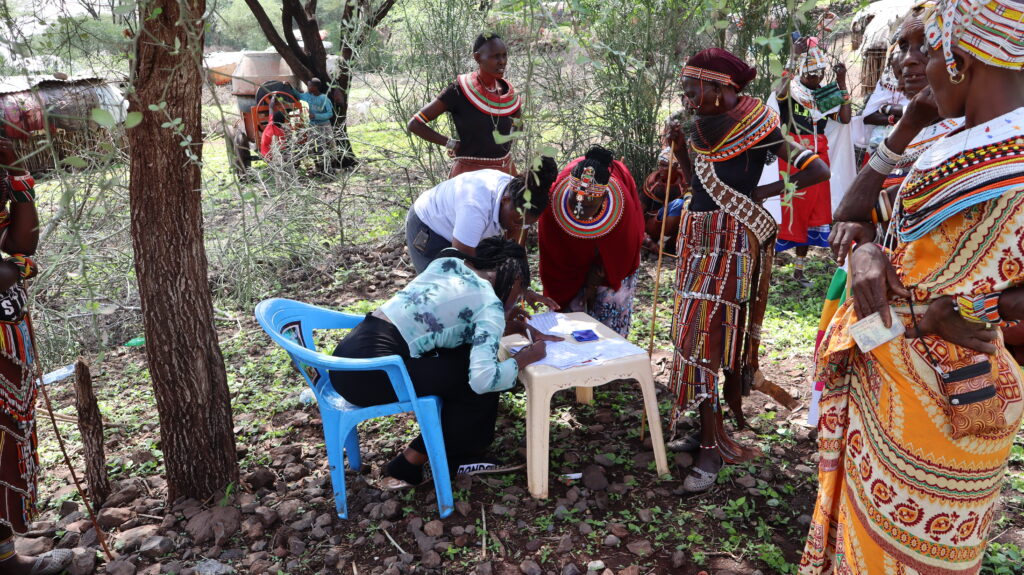
What does a dignified roof mean to a family?
For the families who received the roofing materials, the intervention carries significance beyond the materials themselves.
During the rainy season, a more secure roof offers protection for children, creates safer spaces for family life, helps safeguard household belongings and provides shelter for livestock.
The gratitude expressed by the beneficiary families was a reminder that development interventions are ultimately about people, not distribution figures.
A roofing sheet or tarpaulin may appear to be a modest contribution when viewed from a distance. But for a family that has spent rainy seasons worrying about the condition of its shelter, that contribution can make a meaningful difference.
It also raises a question for development actors, humanitarian organisations and potential partners: Are we paying enough attention to the everyday conditions that determine whether vulnerable families can live with dignity?
Sometimes, the most meaningful interventions are not the most complicated. They are the ones that respond directly to what communities say they need.
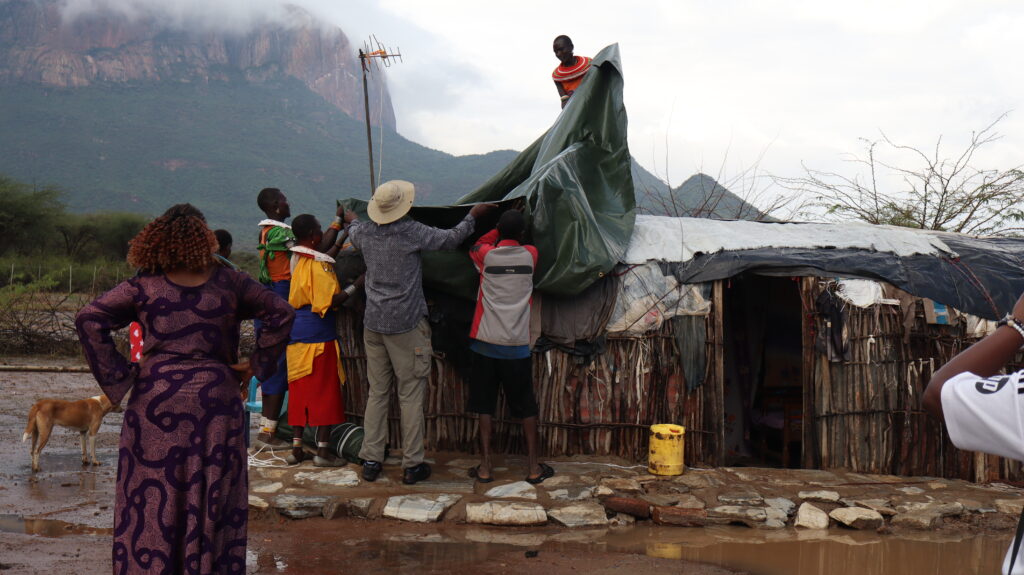
Solidarity must go beyond the first 70 families
Hakimani Eastern Africa recognizes that the needs identified in July have not disappeared simply because the first phase has been implemented.
The remaining 300 households are a reminder that meaningful community transformation requires sustained commitment. One successful intervention should create momentum for the next, rather than become an isolated achievement.
This is where the role of partnerships becomes particularly important.
HUBEJE Belgium’s support demonstrates the value of international solidarity in responding to locally identified challenges. Through the Xavier Network, this partnership has helped translate a community need into tangible support for families in Samburu.
However, the responsibility does not rest with one organisation or donor alone. Friends, development partners, institutions, individuals and well-wishers all have a role to play in extending this support to the households still waiting.
The question is no longer whether the need exists. The needs assessment established that. The question is whether we can collectively mobilise the commitment and resources required to respond to it.
A continuing journey towards human dignity
The November mission was led by Hakimani Eastern Africa’s Executive Director, Rev. James Kayanda, alongside the Communications Team, led by Ms. Susan Nzomo and Ms. Agnes Amoche, who supported the implementation and documentation of the intervention.
For Hakimani Eastern Africa, the Manyatta roofing initiative reflects a broader conviction: development must begin with human dignity and respond to the lived realities of communities.
As we continue working with the communities of Lerata, Kirish and Kamboe, we remain conscious that 70 households reached is an achievement worth celebrating, but 300 households still waiting is a responsibility we cannot ignore.
A roof should not be a privilege reserved for a few families. It should be part of the basic conditions that allow every household to live with dignity, security and hope.
The rains will come. The question is whether we will have done enough to ensure that more families are ready to face them.
Hakimani Eastern Africa extends its sincere appreciation to HUBEJE Belgium, through the Xavier Network, for supporting the first phase of this initiative. We invite friends, partners and well-wishers to join us in extending dignified roofing support to the remaining 300 households in Samburu.