The Motivation of Ecumenism: Beyond differences to a United Humanity.
Experiential Lessons in Interreligious Dialogue and Lived Islam in Indonesia
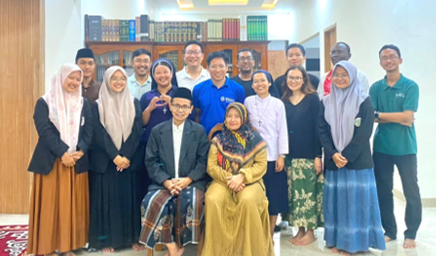
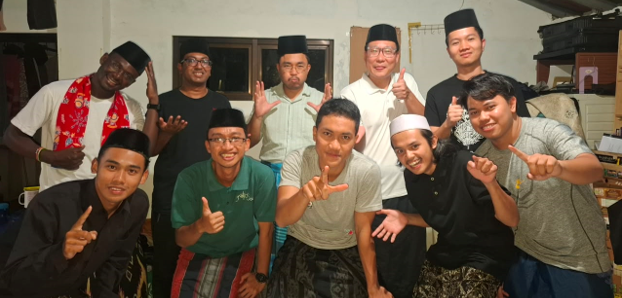
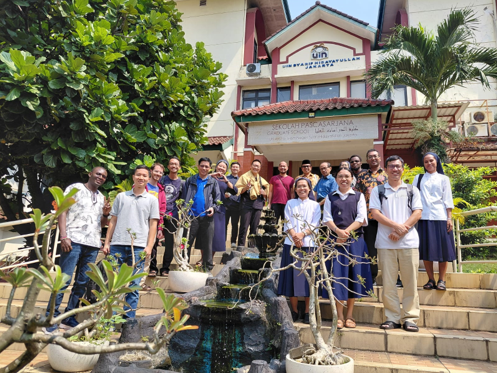
I would like to begin by underscoring the conviction that the experiential engagement is undoubtedly an indispensable pathway to understanding the nuances of faith and culture. This is indeed the impression that I got from the immersion into the Islamic faith and culture in Indonesia dubbed under Asia Pacific Theological Encounter Programme (APTEP). Over a period of twenty-two days, I had the privilege of immersing myself in the Islamic culture of Indonesia (Islam Nusantara). This was an experience that combined academic study and exchanges at the State Islamic Universities (Universitas Islam Negeri) in Jakarta and Purwokerto; engaging dialogues with Muslim scholars and students; as well as undertaking a five-day immersion at a traditional Islamic boarding school (pesantren) in Purwokerto.
At the beginning of the program, lots of expectations and question lingered in my mind. Is the goal of interreligious dialogue merely tolerance or peaceful coexistence? Or can it become a grace through which faith deepens faith? Put in another way, can interreligious dialogue deepen our faith, or does it risk reducing truth to mere pluralism? What is truly at stake? Some friends wondered why it was necessary for a Christian to study about and interact with other faiths especially Islam. Islam and Christianity seem like two rivers in different localities. Can they ever converge?
In the Gospel of Mathew 8:28-34, despite witnessing Jesus’ mighty works, “the whole town came out to meet Jesus, and when they saw him, they begged him to leave their district.” Was it simply because He was different, or because His presence challenged the way they understood God and themselves? These words lingered with me as I began an immersion into Islamic faith and culture in Indonesia. They led me to reflect on the purpose of dialogue.
Authentic interreligious dialogue does not ask us to surrender the truth we have received, but to witness to it with humility and charity. In listening to others, we may discover seeds of goodness, deepen our own convictions, and learn to rejoice wherever truth and virtue are found. We need not be the same to work together for the good, while remaining faithful to the One who is the fullness of Truth. This was the main take away from the lessons by the Islamic scholars, cordial interactions with Muslim faithful and a weeklong immersion into the Islamic pesantren.
To begin with, in Hugh Goddard’s description of the shift from double standards to mutual understanding between Christians and Muslims, we are called to establish common grounds rather than the parallels. This calls for an appreciation of how both the Christian and Islamic theological thoughts developed in history. Even though they seem to be parallel traditions, they both respond to common external realities which affect the entire humanity. Thus there is a need for a deliberate move from the double-standard attitude, that is, mutual ignorance where believers often judge their own faith by its ideals while criticising the other based on its failures; to a mutual understanding.
In the first lecture on June 2 about Sufism in Indonesia, the lesson about the awareness of communication and dialogue between the human spirit and God resonated well with the Gospel reading if the day from Mathew 9: 1-8. In the Gospel, “When Jesus saw their faith, he said to the paralytic, ‘Take courage, child; your sins are forgiven.’” The healing begins not with argument, but with faith, faith shared, faith witnessed, faith that gives life. Even when others question him, Jesus does not diminish their tradition; he reveals God’s presence in a way that invites deeper belief.
In Indonesia, Sufism’s emphasis on submission (islām), faith (īmān), and spiritual excellence (iḥsān) resonates with the Christian call to seek God in all things. Authentic dialogue does not ask us to surrender our convictions or conform to another’s. Rather, it invites us to witness faithfully so that, in God’s providence, each may be drawn more deeply into the truth they seek. Thus, our encounter with other faiths never weaken faith, but strengthen it. Our own fidelity to Christ becomes a gift that encourages others to be ever more faithful to God.
Understanding the motive for ecumenism draws interest in how the religious traditions came about. Since its development, Islam aimed at creating a paradigm from closed tribalism to an open communalism. It did and continues to do this by being culturally rooted, contextually responsive and socially harmonious. Interreligious dialogue is not to be defensive or confrontational but to appreciate how faiths can become lived, practiced and internalised so as to bring peace, tolerance and civility among all people.
Key Learning from my Experience
The exposure to the Islamic culture in Indonesia has left me with indelible lessons. The qualitative insights drawn from this eye-opening journey will be instrumental in my desire for and commitment to interreligious dialogue. Some of the key learnings are as follows.
- Our Shared Humanity as the foundation of Dialogue
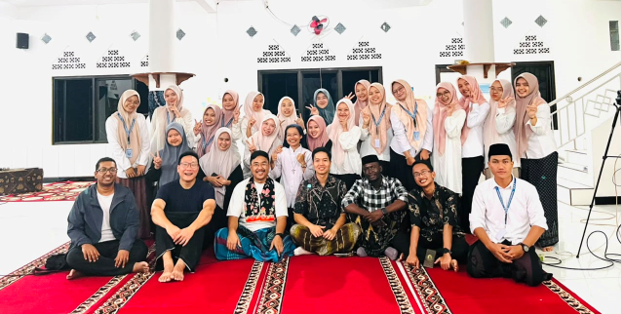
I realised that our common humanity is something to cherish and enhance. As humans, we have a lot that draws us together than apart. Our common humanity forms the bedrock of human connection. In both academic settings in Jakarta and daily interactions in Purwokerto, it became crystal clear that what unites people across diverse faith is far greater than the theological distinctions that separate them. Emphasis should be on orthopraxy and not orthodoxy.
Our creeds are not meant to create barriers, rather, they should act as avenues through which we live our humanity in honour and kindness. When religious dialogues centres on our shared humanity, then diversity in faith transforms a potential point of exclusivity to a shared pursuit for the common good.
- Faith as a Lived Communal Culture
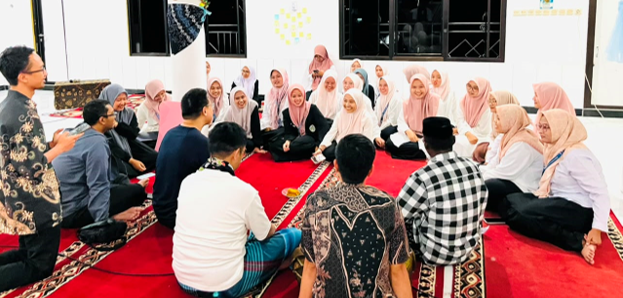
The immersion at the pesantren gave me the impression that religion and faith become solid when they are lived together, in a community as aspects of culture. Faith is not merely to be studied theoretically but lived organically through a deliberate rhythmic and structured communal life. Faith flourishes through a holistic experience of mutual nourishment. This is done through praying together (spiritual nourishment), eating together (physical nourishment) and even sharing spaces (social nourishment).
This was so evident in the pesantren that followed a regular pattern of life in which people are reminded and encouraged to pray and work together. This communal model offers an effective model for interfaith relations. Faith is deepened not in isolation and rivalry, but through shared life, shared spaces and active engagement with one another.
- Religion as a Path to Becoming Better Humans
Our religious beliefs and practices should aim at making us better humans. We realise that even though there is pluralism in the world, the diverse creeds converge at the fact that there is only one God. It is beautiful to fathom that this God is for all and that all humans are equal before this God. Thus, as Mother Teresa is quoted to have said, the role of a Christian is to help a Muslim become a better Muslim, Hindu become a better Hindu and A Christina become a better Christian. Our harmonious coexistence is not just a passive tolerance of diversity or pluralism but an active encouragement for every individual to embody the ethical values of their faith. All should be helped to live what they believe, that is, love which is God Himself.
Conclusion
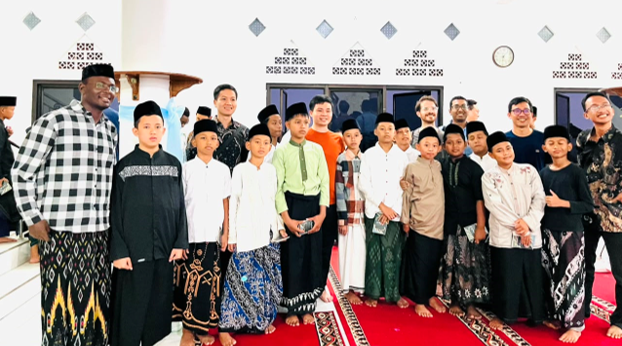
The experiences articulated above affirm that ecumenism is not merely an intellectual exercise in comparing doctrines, but a lived practice that ought to be grounded in encounter, hospitality and shared life. As human beings, regardless of our creeds, we have common goals: to live harmoniously as a people of God. I carry these lessons with me as continue to pursue and deepen my engagement with interreligious dialogue. I strongly hold that the path toward mutual understanding begins with the acknowledgement of our shared humanity and is sustained through genuine, lived community.