Walking with Those at The Margins: Ai, Ethics & Education
By John Francis Mukulu, SJ
As the PhD journey at Sophia University continues, we have gradually changed gear and entered a more demanding phase of research. The work now requires more profound engagement with publications, conferences, and the patient academic discipline necessary to make a meaningful contribution to the rapidly developing field of artificial intelligence.
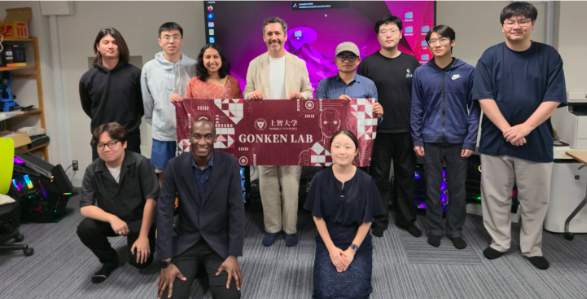
At the Gonsalves AI Lab, we continue to explore different dimensions of artificial intelligence through research, discussion, and collaboration. During the past semester, we were also blessed with visits from professors from several universities in Europe, providing opportunities for academic exchange and for learning from research taking place in different institutional and cultural contexts.
A group photo at Gonsalves AI Research Lab.
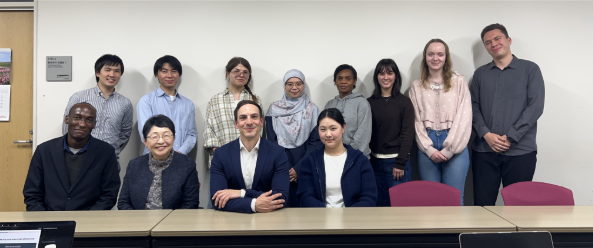
Alongside this technical research, my PhD work continues to focus on AI ethics in education, particularly questions of fairness, governance, inclusion, and responsibility. During the first semester, I also had the opportunity to study international education, which provided another perspective for examining how advances in AI are affecting learning and the lives of students, teachers, and institutions.
For me, this work also forms part of the wider Christian and Jesuit mission. One of the Universal Apostolic Preferences of the Society of Jesus invites us to “walk with the poor, the outcasts of the world, those whose dignity has been violated, in a mission of reconciliation and justice.” As AI becomes increasingly integrated into education, employment, public services, and everyday life, an important question is whether these technologies will expand human opportunity or deepen existing forms of exclusion.
A group photo of an Advanced Lecture on International Education.
Research in AI ethics therefore cannot remain only a technical exercise. It must also ask whose voices are represented, who benefits, who carries the risks, and who may be left behind. In this sense, engaging questions of fairness and responsible AI can become one modest contribution to the society’s mission of accompanying those at the margins and defending human dignity.
As the work intensifies, we thank God for the graces received so far and pray for the wisdom, perseverance, and generosity needed to place our studies at the service of a greater mission.